Comparisons
Compounded tirzepatide vs Zepbound®: what's the difference?
September 25, 2026 · 7 min read
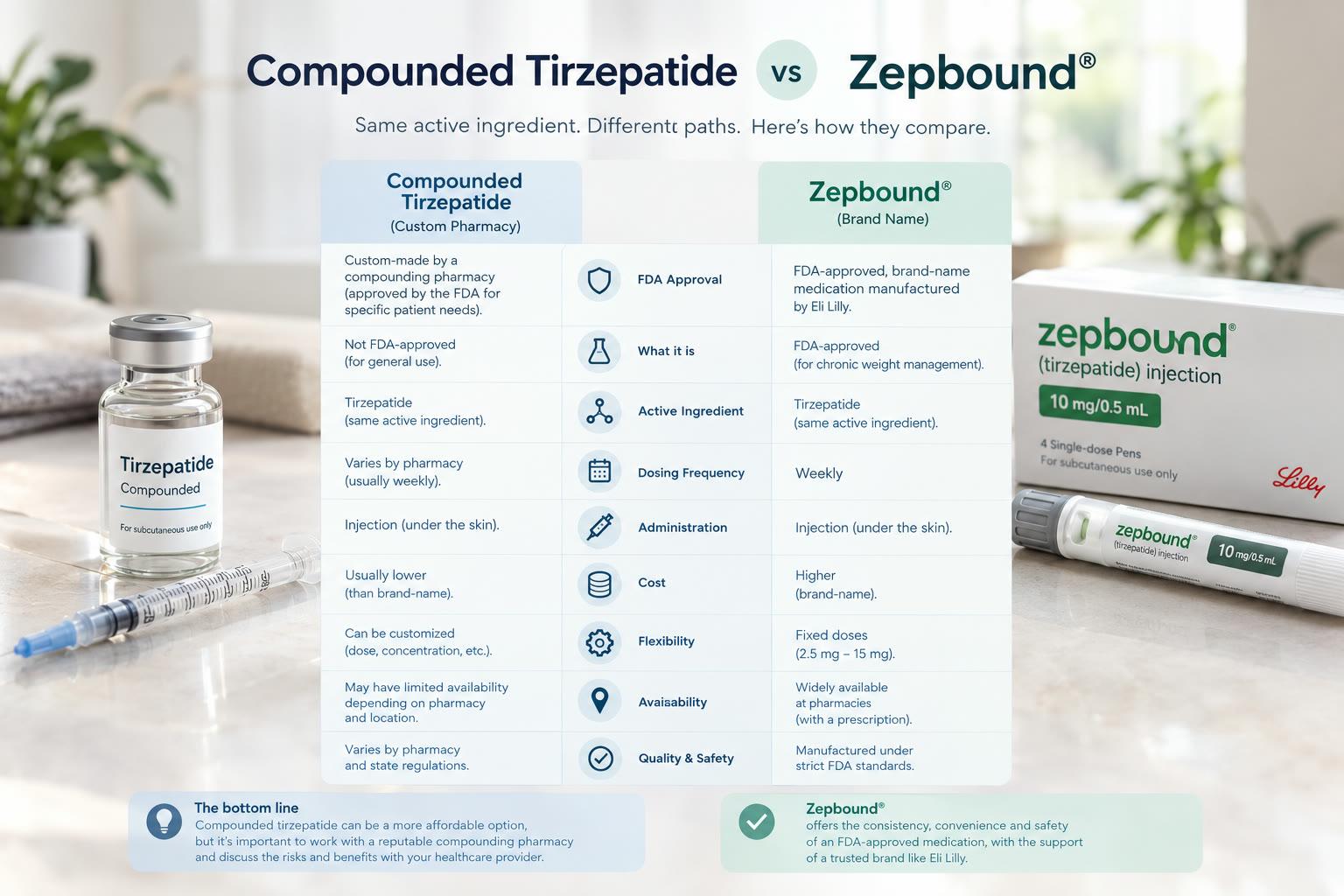
Same active ingredient, different products: how compounded tirzepatide and Zepbound® differ in approval, oversight, form, price and where you get them.
Anyone comparing a compounded tirzepatide program with Zepbound® is comparing two things that share one ingredient and almost nothing else about how they reach you. This article sets the differences side by side without claiming one is better, because that is not a claim anyone can make from the evidence.
What is Zepbound®?
Zepbound® is the brand-name tirzepatide product made by Eli Lilly. It was approved by the FDA in November 2023 for chronic weight management in adults with obesity, or with overweight and at least one weight-related condition, and in December 2024 for moderate-to-severe obstructive sleep apnea in adults with obesity. It comes in single-dose pens, and in single-dose vials sold for self-pay through the manufacturer's own service. The dose starts at 2.5 mg a week and can step up to 15 mg.
What is compounded tirzepatide?
Compounded tirzepatide is tirzepatide prepared by a state-licensed compounding pharmacy for an individual patient, on a licensed clinician's prescription, rather than manufactured as a brand product. Compounded medications are not FDA-approved and are not reviewed by the FDA for safety, effectiveness, or quality. Compounding pharmacies are regulated: they are licensed by state boards and subject to federal requirements for how preparations are made and handled. But that oversight is different in kind from the approval process Zepbound® went through, and the two should not be treated as the same product at different prices.
| Zepbound® | Compounded tirzepatide | |
|---|---|---|
| Active ingredient | Tirzepatide | Tirzepatide |
| Made by | Eli Lilly | A licensed compounding pharmacy, per patient |
| FDA status | FDA-approved for chronic weight management and obstructive sleep apnea in adults with obesity | Not FDA-approved; not reviewed by the FDA for safety, effectiveness, or quality |
| Form | Single-dose pens; single-dose vials for self-pay | Prepared by the pharmacy on the prescription; at GLP, a once-weekly injection |
| Dose | 2.5 mg to 15 mg a week, in the label's steps | Set by the prescribing clinician |
| Where you get it | Any pharmacy, with a prescription; vials through the manufacturer | Through a clinician who prescribes it and the pharmacy that prepares it |
| Price | List price roughly a thousand dollars or more a month before insurance; vials lower through the manufacturer | At GLP, $339 per 4 weeks, cash-pay |
| Insurance | Coverage for weight management varies by plan | Not covered; cash-pay |
Is compounded tirzepatide as good as Zepbound®?
Nobody can tell you that honestly. There are no head-to-head trials, and compounded preparations are not reviewed by the FDA for effectiveness or quality. The active ingredient is the same; the preparation is not the approved product. A licensed clinician can explain what that means for you, and the compounding pharmacy is responsible for what it prepares. What you should expect from any provider is to be told plainly that a medication is compounded, which pharmacy prepares it, and what that means, before you decide.
How much does each cost?
Zepbound® carries a manufacturer list price of roughly a thousand dollars or more for a month's supply before insurance or savings programs; what a person actually pays depends on coverage, and Lilly sells the vials for self-pay at a lower price through its own service. GLP's Tirzepatide Injections program is $339 per 4 weeks, billed every 4 weeks, cash-pay, with the price shown before you pay and no insurance involved.
Which one can I get through GLP?
Only the compounded option. GLP's clinicians do not prescribe Zepbound® or any brand-name product. If a tirzepatide program is prescribed after the free assessment, the medication is compounded tirzepatide, dispensed by an independent, licensed U.S. pharmacy, at a dose the clinician sets and adjusts from your check-ins. Completing the assessment is not a guarantee of a prescription.
This article is educational and is not a substitute for personalized medical advice. Whether any medication is appropriate for you is a decision for a licensed clinician who has reviewed your health history.