Stopping & maintenance
GLP-1 maintenance doses explained
October 2, 2026 · 6 min read · Medically reviewed by Bryan Milton, MD · Reviewed October 2, 2026
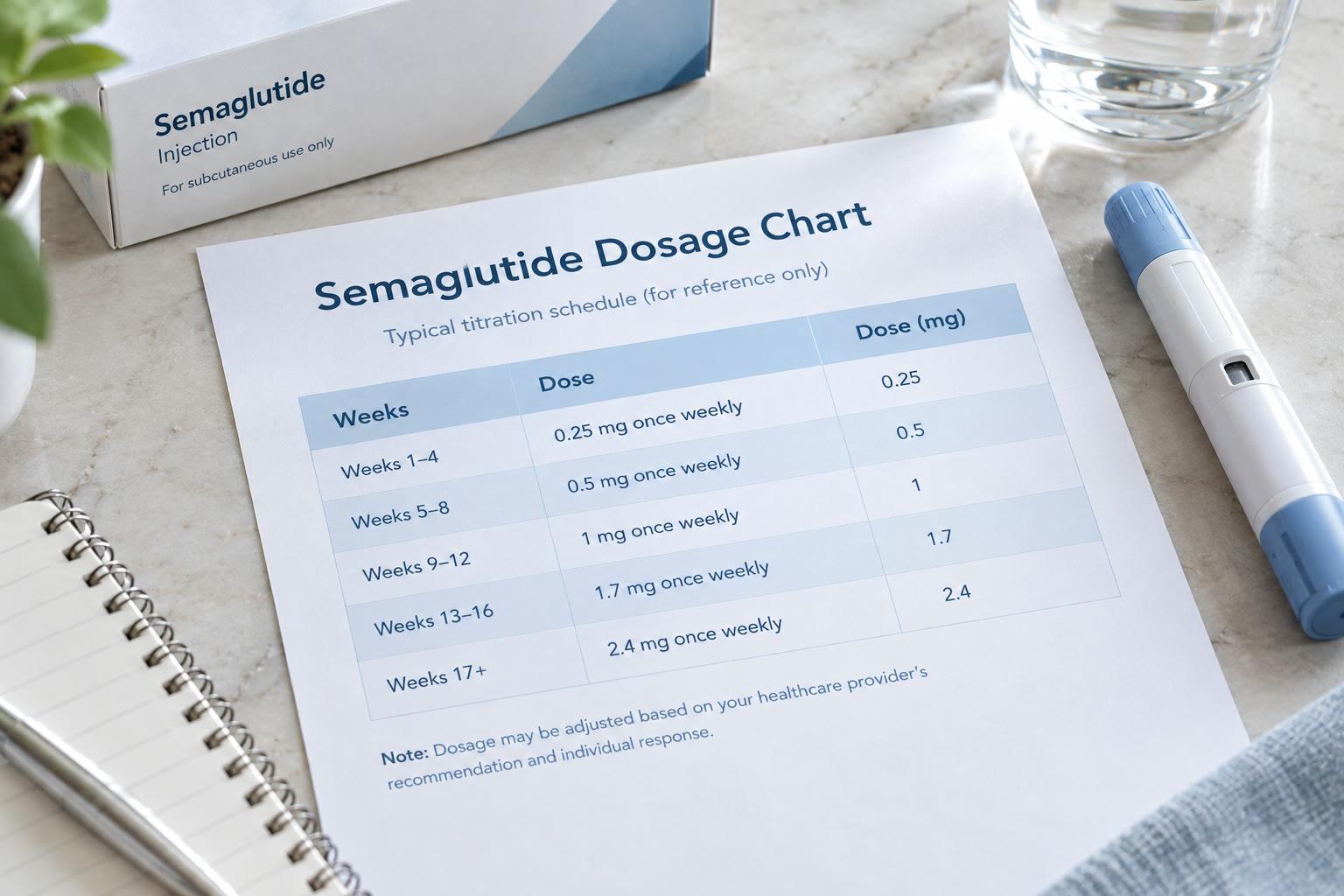
A maintenance dose is where titration stops, not a universal number. What the labels describe, why yours may differ, and how clinicians decide to hold.
People hear 'maintenance dose' and assume a specific number they are working toward. The approved labels are less rigid than that, and the practical answer for most people is less about arithmetic than about what is working.
What is a maintenance dose?
The dose at which titration stops and treatment continues. The approved labels describe a titration upward through defined steps, and name a maintenance dose or a maintenance range at the top of it. Both semaglutide and tirzepatide labels allow more than one maintenance level, which is the part people miss.
So 'maintenance' is a stage, not a figure. Where yours sits is a clinical decision.
Is the highest dose the goal?
No, and treating it as one is a common misunderstanding. The aim is the lowest dose that is achieving what the treatment is for and that you tolerate. Climbing to the top of a range for its own sake means more side effects and more medication for no additional purpose, and the labels themselves support holding where a step is not tolerated.
| Factor | How it bears on the decision |
|---|---|
| Is it working? | If the current dose is doing what it should, climbing adds little |
| Tolerability | Side effects at a step are a reason to hold or step back |
| What is being treated | Blood-sugar treatment and weight management weigh differently |
| Other medications | Interactions and combinations can cap the sensible dose |
| Your own history | How earlier steps went is the best available predictor |
| Cost and supply | Legitimate to raise; a lower dose is usually cheaper |
Can a maintenance dose be below the labelled range?
Yes, and that is where maintenance and microdosing meet. A clinician can hold someone at a dose below the labelled maintenance range if it is working for them. The honest caveat is that lower-than-standard dosing has not been studied the way the labelled schedule has, so the decision rests on your response rather than on trial evidence. That trade-off is covered in the microdosing articles.
Does a maintenance dose stay the same forever?
It gets reviewed. Reasons it might change: side effects appearing later, weight or health status changing, a new medication, a plateau, pregnancy plans, or a decision to try coming down. Maintenance is a position you are held at while being watched, not a setting you are left on.
What should I ask at a check-in?
- What dose am I on, and is this my maintenance dose or a step on the way?
- What would make you increase it, and what would make you hold?
- If this dose is working, is there a reason to go higher?
- What is the plan over the next few months?
- What should I report between check-ins?
At GLP the dose is set and adjusted by a licensed clinician from your check-ins, and both the standard and lower-dose programs use compounded medication. Compounded medications are not FDA-approved and are not reviewed by the FDA for safety, effectiveness, or quality.
This article is educational and is not a substitute for personalized medical advice. Whether any medication is appropriate for you is a decision for a licensed clinician who has reviewed your health history.