Microdosing
Microdosing vs standard GLP-1 dosing: how the schedules differ
October 2, 2026 · 6 min read · Medically reviewed by Bryan Milton, MD · Reviewed October 2, 2026
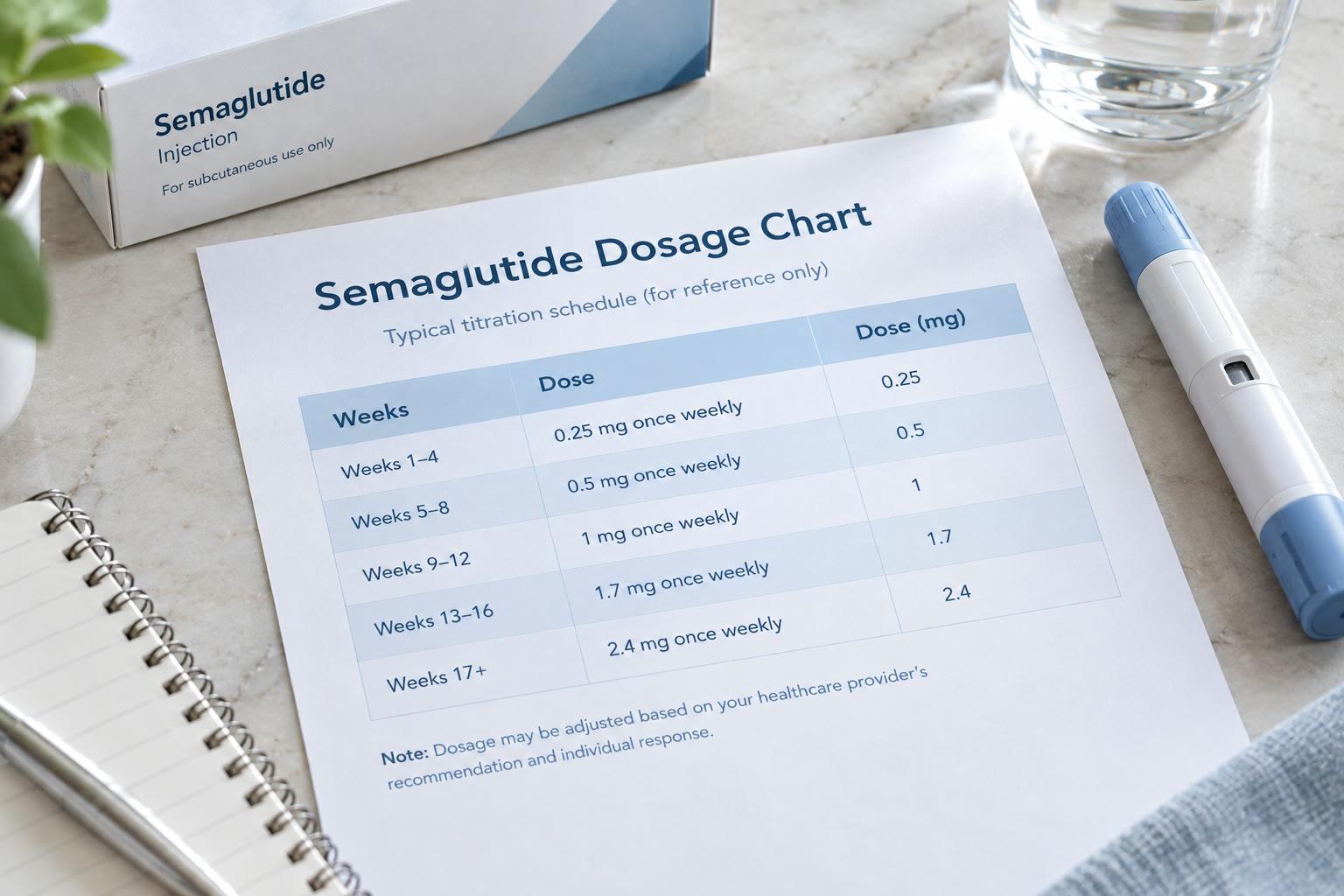
A standard GLP-1 schedule climbs toward a maintenance dose; a microdose program holds below it. Here is how the two differ in evidence, tolerability and cost.
The difference between standard and microdose GLP-1 dosing is not the drug. It is how far up the dose ladder you go, and therefore how much published evidence describes what you are doing. Everything else — the medication, the screening, the monitoring — is the same.
What is a standard GLP-1 dosing schedule?
Every approved GLP-1 label describes a titration: a low starting dose held for about four weeks so the body can adjust, then increases at intervals of at least four weeks toward a maintenance dose. Semaglutide injections start at 0.25 mg weekly; tirzepatide starts at 2.5 mg weekly and moves in 2.5 mg steps. The starting dose is explicitly not a treatment dose in either case — it exists to make the climb tolerable.
How is a microdose schedule different?
Microdosing a GLP-1 means staying on a dose below the standard maintenance schedule rather than stepping up to it. The approved products were studied on a titration schedule that rises over several weeks to a target dose; a microdose program holds below that, at a level a licensed clinician sets and adjusts.
In practice that means the step-ups either stop early or never happen, and the clinician's job shifts from following a ladder to deciding, from your check-ins, whether the dose you are on is doing what it should and whether it should change.
| Standard schedule | Microdose program | |
|---|---|---|
| Shape of the schedule | Starting dose, then steps up at four-week intervals | Held below the standard range, adjusted individually |
| What the evidence covers | This is the regimen the approved products were studied on | Not studied as a maintenance regimen |
| Side-effect pattern | Clusters in early weeks and after each step up | Fewer step-up triggers; the labelled risks still apply |
| Cost driver | More medication as the dose rises | Less medication, which is why the program price is lower |
| Monitoring | Check-ins against the titration plan | Check-ins against your own response |
Is one better than the other?
Not as a general rule, and anyone answering that question without knowing your history is guessing. The studied schedule has the evidence behind it. A lower dose has the better tolerability story for some people and the weaker evidence base for everyone. Which trade-off is right depends on what is being treated, what else you take, how you respond, and what you are willing to accept — which is a conversation, not a lookup.
Can you move between them?
Yes, in either direction, and only as a clinical decision. Someone on a microdose whose clinician thinks the standard schedule fits better can be moved up; someone on the standard schedule who cannot get past a step can be held or moved down. What you should not do is adjust the dose yourself, or take two doses to catch up after a missed one. Message your care team instead.
At GLP both routes exist as separate programs with their own prices, shown before you pay, and the same clinician-led screening sits in front of both. Compounded medications are not FDA-approved and are not reviewed by the FDA for safety, effectiveness, or quality.
This article is educational and is not a substitute for personalized medical advice. Whether any medication is appropriate for you is a decision for a licensed clinician who has reviewed your health history.