Results & timelines
Not feeling anything on the starting dose?
October 2, 2026 · 5 min read · Medically reviewed by Bryan Milton, MD · Reviewed October 2, 2026
The approved labels say the starting dose is not a treatment dose. Why feeling nothing in month one is expected, and what would change that.
A lot of people finish their first month convinced nothing is happening and that they have wasted a cycle. The approved labels are clear about why that is expected, and the explanation is reassuring in a way nobody tends to explain up front.
What the labels actually say
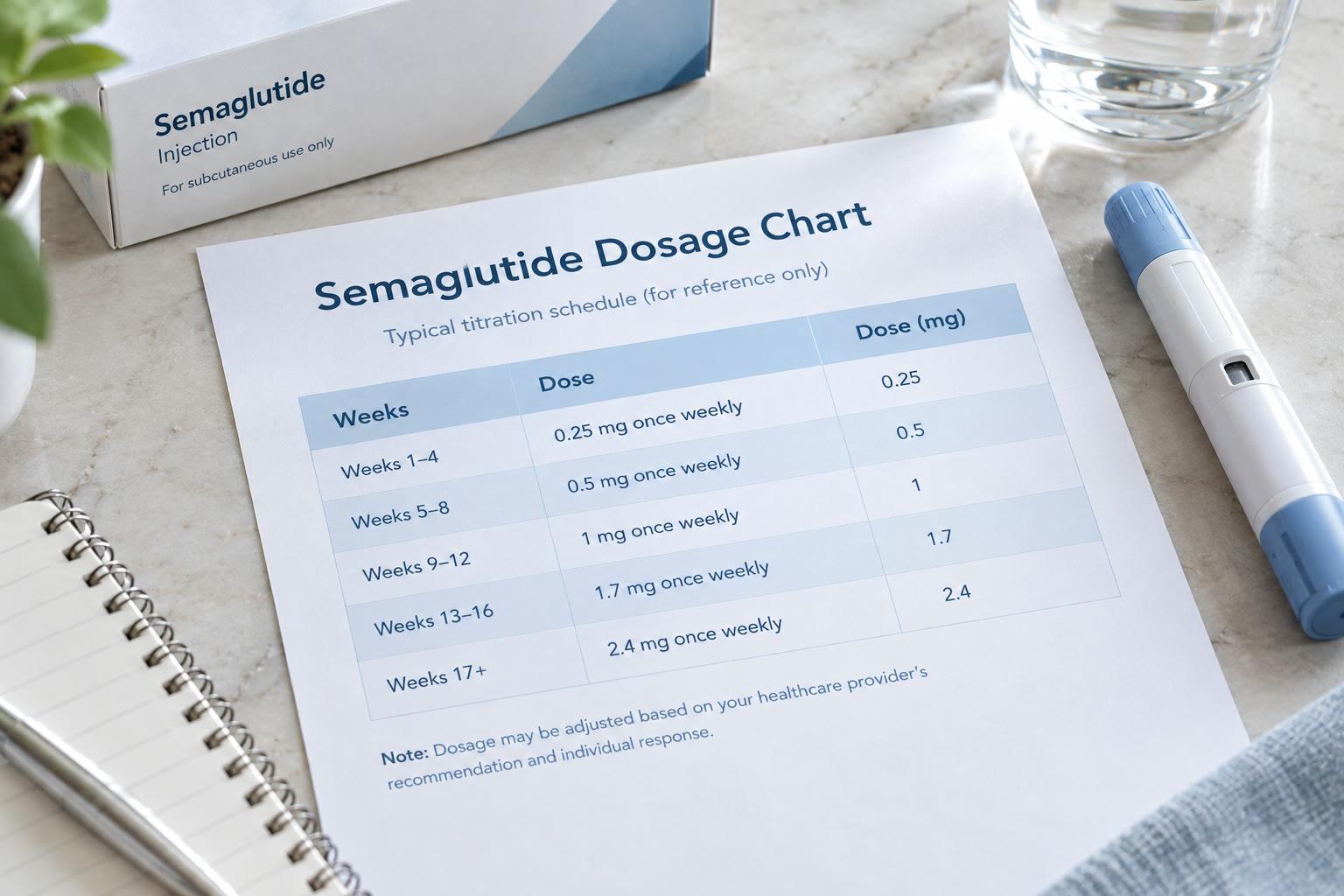
The starting dose exists for tolerability. Semaglutide injections start at 0.25 mg once weekly and the labels state plainly that this is not a treatment dose — it is there so the body can adjust before the dose is increased. Tirzepatide starts at 2.5 mg weekly with the same logic, stepping up in 2.5 mg increments at intervals of at least four weeks.
So month one is doing a job, and the job is not the one you are measuring.
Why is it designed that way?
Because the commonly reported gastrointestinal side effects cluster around dose increases. Starting low and climbing slowly is what makes the medication tolerable enough to reach a dose that does something. Skipping that is how people end up vomiting and stopping altogether.
Is feeling nothing bad?
No, and it may be an advantage. Plenty of people feel appetite changes at a starting dose; plenty do not; both go on to respond. What the first month genuinely tells your clinician is whether you tolerate the medication — and feeling nothing is a good answer to that question.
| Measuring | Not measuring |
|---|---|
| Whether you tolerate the medication | Whether it will work for you |
| Whether side effects are manageable | What your eventual dose will be |
| Whether you can keep to the schedule | Your final response |
What should I do?
- Keep to the schedule. Same day each week, at the prescribed dose.
- Tell your care team what you are and are not noticing, including nothing. That is the information behind the next dose decision.
- Use the month to set up protein, resistance training and sleep. Those take longer to establish than a dose takes to increase.
- Do not increase the dose yourself, and do not double after a missed dose. Both are unmonitored dose changes and both are how month one goes wrong.
- Do not judge by the scale daily. In month one it is mostly noise.
When would feeling nothing matter?
Later, and at a different dose. If you have been at a dose your clinician considers adequate for a reasonable stretch and nothing is happening, that is a genuine finding — and the responses are clinical: review the dose, look for another contributor, consider a different molecule, or conclude this class is not the right tool. That is the conversation covered in the article on not losing weight.
At GLP a licensed clinician sets and adjusts the dose from your check-ins, which is precisely why the check-ins are where this belongs. Compounded medications are not FDA-approved and are not reviewed by the FDA for safety, effectiveness, or quality.
This article is educational and is not a substitute for personalized medical advice. Whether any medication is appropriate for you is a decision for a licensed clinician who has reviewed your health history.