Compounded medication
503A vs 503B compounding pharmacies: the difference
October 2, 2026 · 6 min read · Medically reviewed by Bryan Milton, MD · Reviewed October 2, 2026
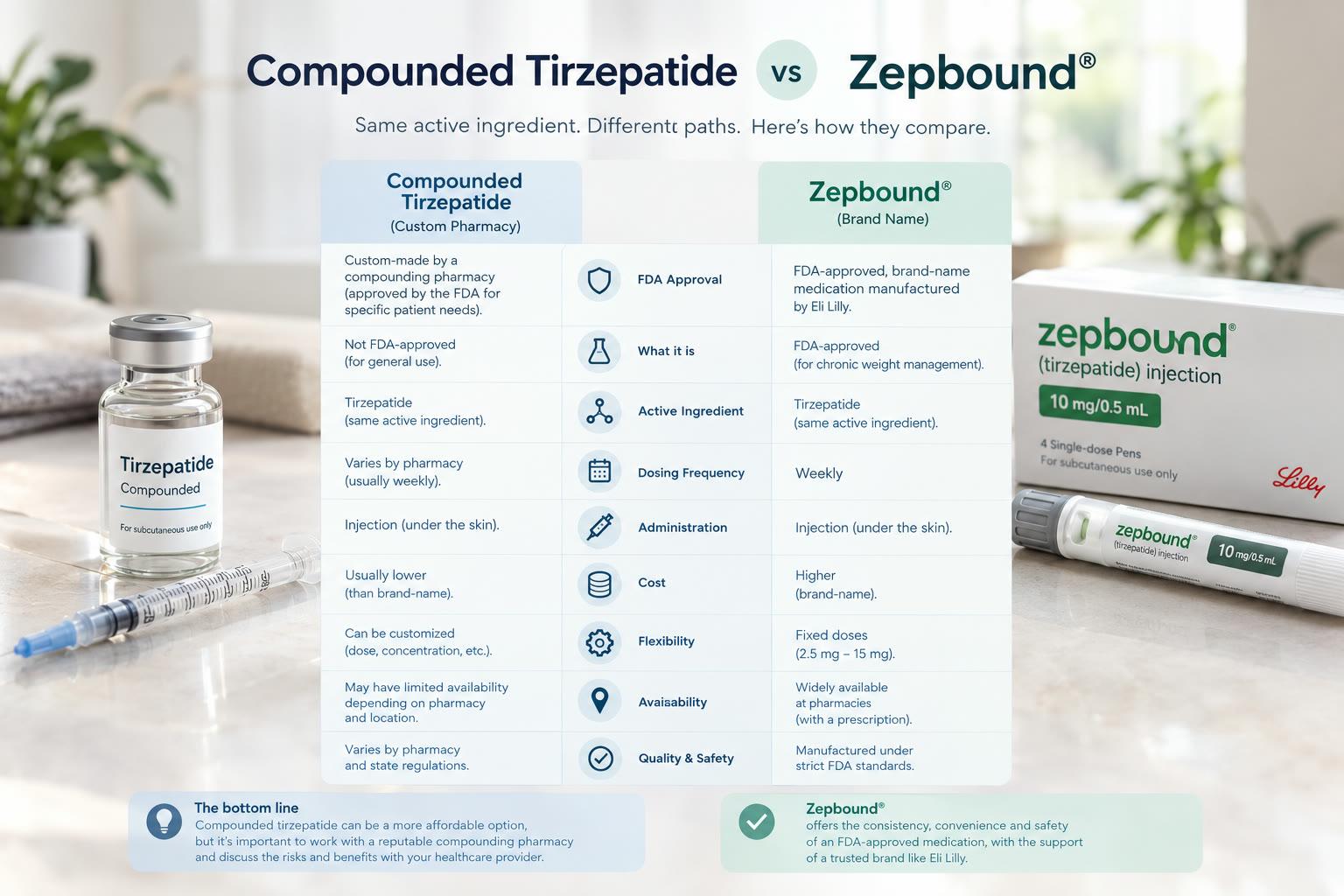
Two sections of federal law, two kinds of compounding pharmacy, two oversight regimes. What separates them and why it matters for a prescription you receive.
If you have read anything about compounded medication you have probably seen '503A' and '503B' used as though everyone knows what they mean. They are sections of the federal Food, Drug, and Cosmetic Act, and they describe two different kinds of pharmacy with different rules and different oversight.
What is a 503A pharmacy?
A traditional compounding pharmacy. It prepares a medication for an identified patient against a prescription from a licensed clinician. Its primary regulator is the state board of pharmacy where it is licensed, and it works to the compounding standards published by the United States Pharmacopeia (USP), including the chapters covering sterile preparations. It does not need to register with the FDA as an outsourcing facility, and its preparations are not FDA-approved.
What is a 503B outsourcing facility?
A facility that compounds in bulk — typically supplying hospitals and clinics rather than filling individual prescriptions. It must register with the FDA, is subject to FDA inspection, and must comply with current Good Manufacturing Practice, the same framework that governs drug manufacturing. Its preparations are also not FDA-approved: registration and inspection are not approval of a product.
| 503A | 503B | |
|---|---|---|
| Prepares against | A patient-specific prescription | Bulk orders, often office stock |
| Registers with the FDA | No | Yes, as an outsourcing facility |
| Routinely FDA-inspected | No | Yes |
| Standard applied | USP compounding chapters | cGMP |
| Product is FDA-approved | No | No |
| Typical customer | A patient | A healthcare facility |
Is one safer than the other?
The honest answer: cGMP and routine FDA inspection are a higher and more consistent bar than state oversight alone, which is why 503B exists. That does not make every 503A pharmacy risky or every 503B facility faultless — both have had failures, and a well-run 503A pharmacy filling your individual prescription is a normal, long-established part of medicine. What the distinction gives you is a real question to ask: which kind of facility prepared this, and under which regime.
Why does this come up with GLP-1s?
Because the restrictions on compounding a copy of an approved drug, and the shortage-related exceptions to them, do not apply identically to the two categories. That is a legal distinction with practical consequences for what can be prepared and when — one of the reasons the status of compounded GLP-1 preparations has moved over time.
What should I ask?
- Which pharmacy prepared my medication, and is it a 503A pharmacy or a 503B outsourcing facility?
- Which state licenses it, and is it in good standing?
- What is the concentration, and what is the beyond-use date?
- Who do I contact about the preparation itself, as opposed to my prescription?
GLP names its pharmacy partners in its Terms of Service, with addresses and phone numbers, so these questions have answers you can look up rather than take on trust. Compounded medications are not FDA-approved and are not reviewed by the FDA for safety, effectiveness, or quality.
This article is educational and is not a substitute for personalized medical advice. Whether any medication is appropriate for you is a decision for a licensed clinician who has reviewed your health history.