Dosing & injections
Units vs mg on a compounded GLP-1 label
October 2, 2026 · 6 min read · Medically reviewed by Bryan Milton, MD · Reviewed October 2, 2026
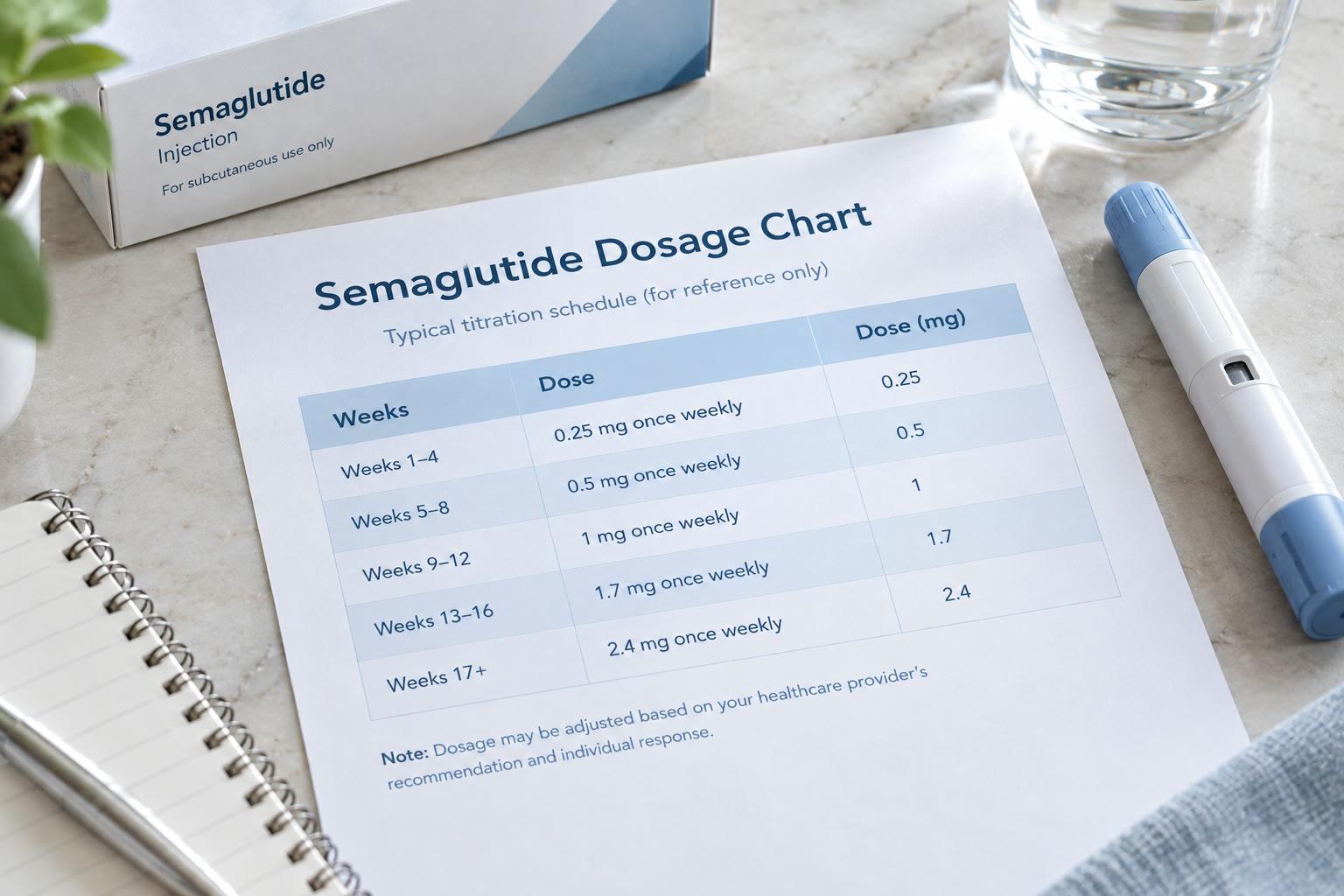
Why a units-to-milligrams conversion cannot be published safely, where the real answer lives, and how dosing errors with compounded vials actually happen.
This is the one article in this cluster that deliberately does not answer the question people search for, and the reason is worth stating plainly: the conversion between units on a syringe and milligrams of medication depends on the concentration of your particular vial, which only your label states. A worked example here would be arithmetic applied to the wrong number, and the error that follows is usually tenfold.
Why the two measurements are different
A milligram is a mass of medication. A unit on an insulin syringe is a measure of volume — on a standard U-100 syringe, one unit is one hundredth of a millilitre. There is no fixed relationship between the two, because the link between them is how much medication is dissolved in each millilitre of your vial. That is the concentration, and it is a property of the preparation, not of the drug.
Two vials both labelled 'compounded semaglutide' can hold different concentrations. Drawing the same number of units from each delivers different doses. That is the whole problem in one sentence.
Why no article should publish a conversion
- The concentration varies between pharmacies, between preparations and sometimes between refills from the same pharmacy.
- A reader who applies a figure from the internet to a vial with a different concentration gets a dose that is wrong by whatever factor the concentrations differ by — frequently ten.
- Syringes come in more than one capacity and gradation, so even the unit-to-millilitre step is not universal.
- Dosing errors with GLP-1s obtained or measured outside clear instructions are documented, and the FDA has published safety information on them. People have needed emergency care.
That is not a disclaimer attached to a number. It is the reason the number is not here.
Where the real answer is
| Question | Who answers it |
|---|---|
| What dose am I prescribed? | Your prescribing clinician, on your prescription |
| What is the concentration of this vial? | The label and the pharmacy that dispensed it |
| How many units of this syringe is my dose? | The pharmacy's instructions for your preparation |
| Which syringe should I use? | The pharmacy, which supplies or specifies it |
| Something does not add up | Stop, and message your care team or the pharmacist |
A properly dispensed compounded preparation comes with instructions that state the dose in the units of the syringe supplied. If yours did not, that is not a gap for you to fill with arithmetic — it is a reason to call the pharmacy before you draw anything up.
How errors actually happen
Rarely through recklessness. The common pattern is someone with a new vial at a slightly different concentration, applying the volume they used last time; or someone switching syringe types; or someone converting from a figure found online that assumed a different preparation. In each case the person was trying to be careful, which is exactly why 'be careful' is not the lesson. The lesson is: the dose in units comes from your own instructions, every time, including after a refill.
What to do before your first dose, and after every refill
- Read the label and the instruction sheet, and find the concentration and the dose in units.
- Check that the syringe you have matches the one the instructions assume.
- Compare against your last refill. If anything differs, ask why before using it.
- If anything is unclear or absent, do not inject — message your care team or call the pharmacy.
Compounded medications are not FDA-approved and are not reviewed by the FDA for safety, effectiveness, or quality.
Your own prescription label and the instructions that came with it are the authority on your medication. A compounded preparation can differ from an approved product in concentration, storage and beyond-use date, so where this article and your label disagree, the label wins — and your care team can settle anything unclear.
This article is educational and is not a substitute for personalized medical advice. Whether any medication is appropriate for you is a decision for a licensed clinician who has reviewed your health history.