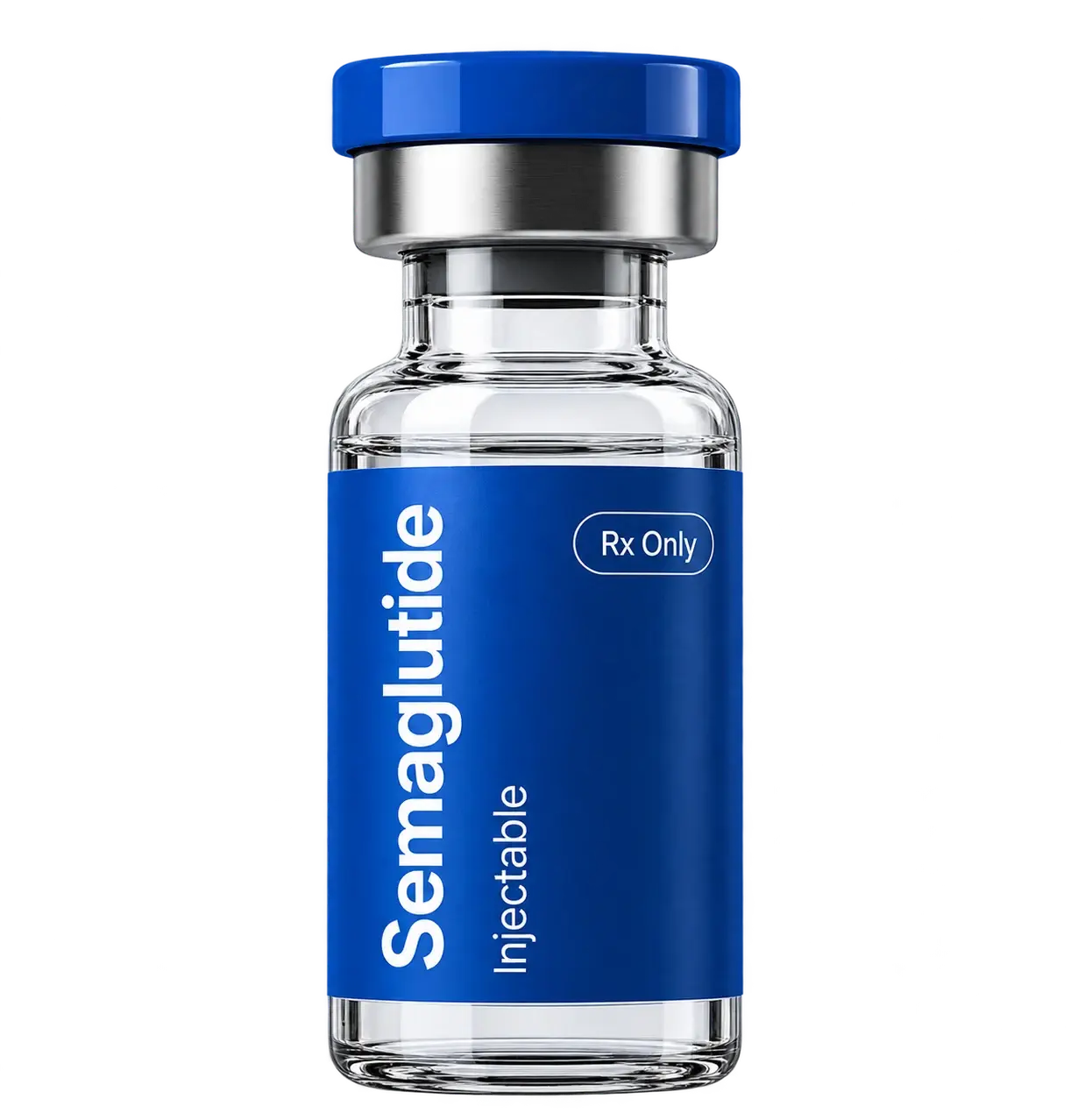
Semaglutide Microdose Injection
Compounded semaglutide at a lower dose
One simple injection per week.
Compounded semaglutide prescribed at a lower dose than a standard program, taken as a once-weekly injection — prescribed only when a licensed clinician decides it's appropriate, with a care team you can message as you go.
- Format
- Once-weekly injection
- Ingredient
- Semaglutide
- Prescription
- Required
- Per 4 weeks
- $179 · confirmed before you pay
Licensed U.S. clinicians · No commitment — cancel anytime · Free, discreet shipping
Already a member? Request a refill
What's included
- Prescribed online only when a licensed clinician decides it's appropriate
- Check-ins and dose guidance included
- Free, discreet shipping
- No contracts — cancel anytime
How it starts
- 1
Start the free 2-minute assessment
- 2
A licensed clinician reviews and decides
- 3
If prescribed, delivered to your door
Prescription required
A licensed clinician reviews your assessment and prescribes only if it's appropriate for you — and tells you plainly if it isn't. Submitting an assessment is not a guarantee of treatment. You don't choose your medication.
About compounded medications
GLP does not manufacture compounded medications. Compounded medications are not FDA-approved and are not reviewed by the FDA for safety, effectiveness, or quality. They are prepared by state-licensed pharmacies.
This page is general information, not medical advice. Availability, pricing, and treatment options vary by state.
Semaglutide Microdose Injection: what to know
The Semaglutide Microdose Injection is compounded semaglutide prescribed at a lower dose than GLP's standard program and taken as a once-weekly injection. Compounded medications are not FDA-approved and are not reviewed by the FDA for safety, effectiveness, or quality. A licensed clinician sets and adjusts the dose; $179 per 4 weeks.
What is a semaglutide microdose?
Semaglutide is a GLP-1 receptor agonist that mimics a gut hormone involved in appetite, fullness and blood-sugar regulation. GLP's standard program steps the dose up over several weeks to a maintenance dose. A microdose program stays below that: a smaller amount, held at a low step, adjusted by your clinician rather than stepped up on the usual timetable.
Lower-than-standard dosing is not an FDA-approved regimen and has no established evidence base of its own; the program page on GLP-1 microdosing explains what that means. The medication is compounded semaglutide. Compounded medications are not FDA-approved and are not reviewed by the FDA for safety, effectiveness, or quality.
GLP does not manufacture or compound any medication. Prescriptions are dispensed by independent, licensed U.S. pharmacies (RedRock Pharmacy, Health Warehouse, Precision Medicine, Triad Rx); which one fills your order depends on your treatment and your state.
How is the dose set at GLP?
A licensed clinician reviews your assessment and decides whether a lower-dose program is appropriate, whether the standard program fits better, or whether treatment is not indicated. If a microdose is prescribed, your clinician sets it, holds it, and adjusts it over time from your check-ins. The dose is never something you choose, and you do not move to the standard program unless your clinician decides to.
It is taken once a week, as an injection under the skin, on the same day each week, following the pharmacy's instructions for storage and use.
What side effects can occur at a lower dose?
Side effects can occur at any dose, and a smaller amount is not a guarantee of fewer. The most common side effects of semaglutide are gastrointestinal: nausea, vomiting, diarrhea, constipation, abdominal pain and reduced appetite. They tend to appear in the early weeks and after a dose increase, which is why the dose is stepped up slowly and can be held when a step is not being tolerated.
Semaglutide may cause serious side effects, including possible thyroid C-cell tumors, pancreatitis, gallbladder disease, low blood sugar when combined with insulin or sulfonylureas, kidney problems with dehydration, and complications of diabetic retinopathy. Your clinician screens for these before prescribing. Message your care team about any symptom that concerns you; for a medical emergency, call 911.
Who should not take semaglutide?
Semaglutide is contraindicated in anyone with a personal or family history of medullary thyroid carcinoma or Multiple Endocrine Neoplasia syndrome type 2, and in anyone who has had a serious allergic reaction to it. Pregnancy, planning a pregnancy and breastfeeding rule treatment out. A history of pancreatitis or gallbladder disease, significant gastrointestinal conditions, type 1 diabetes, and medications that affect blood sugar all call for clinical judgment. None of these lists is exhaustive; that is what the assessment screens for, and why a clinician can say no.
What does $179 per 4 weeks include?
The price is billed every 4 weeks and confirmed before you pay. Check-ins and dose guidance are included, shipping is free and tracked in plain packaging, and you can message your care team between check-ins. Exactly what the price does and does not cover is shown before you pay. GLP is cash-pay: no insurance, no claims, no paperwork. There are no contracts; cancel with 72 hours' notice before your next billing date. Availability, pricing and treatment options vary by state.
Frequently asked questions
Related
This page is general information, not medical advice. Whether any medication is appropriate for you is a decision for a licensed clinician who has reviewed your health history. Availability, pricing, and treatment options vary by state.

Personalized treatments, built around your goals
Licensed providers. Science-backed treatments. Fully online.
Get started today