Side effects
Injection site reactions: redness, itching and lumps
October 2, 2026 · 5 min read · Medically reviewed by Bryan Milton, MD · Reviewed October 2, 2026
Mild redness, itching or a small lump at the injection site is listed on the labels and usually settles. What helps, and which reactions need urgent attention.
A small red, itchy or slightly raised spot where you injected is common and usually unremarkable. Injection site reactions appear among the listed adverse reactions on the approved labels, and the great majority settle without anything being done.
What does a normal reaction look like?
Mild redness, some itching, slight swelling, or a small firm lump at the site, appearing within hours and fading over a day or a few. It stays local — confined to the area around the injection — and it is not getting steadily worse.
What reduces them?
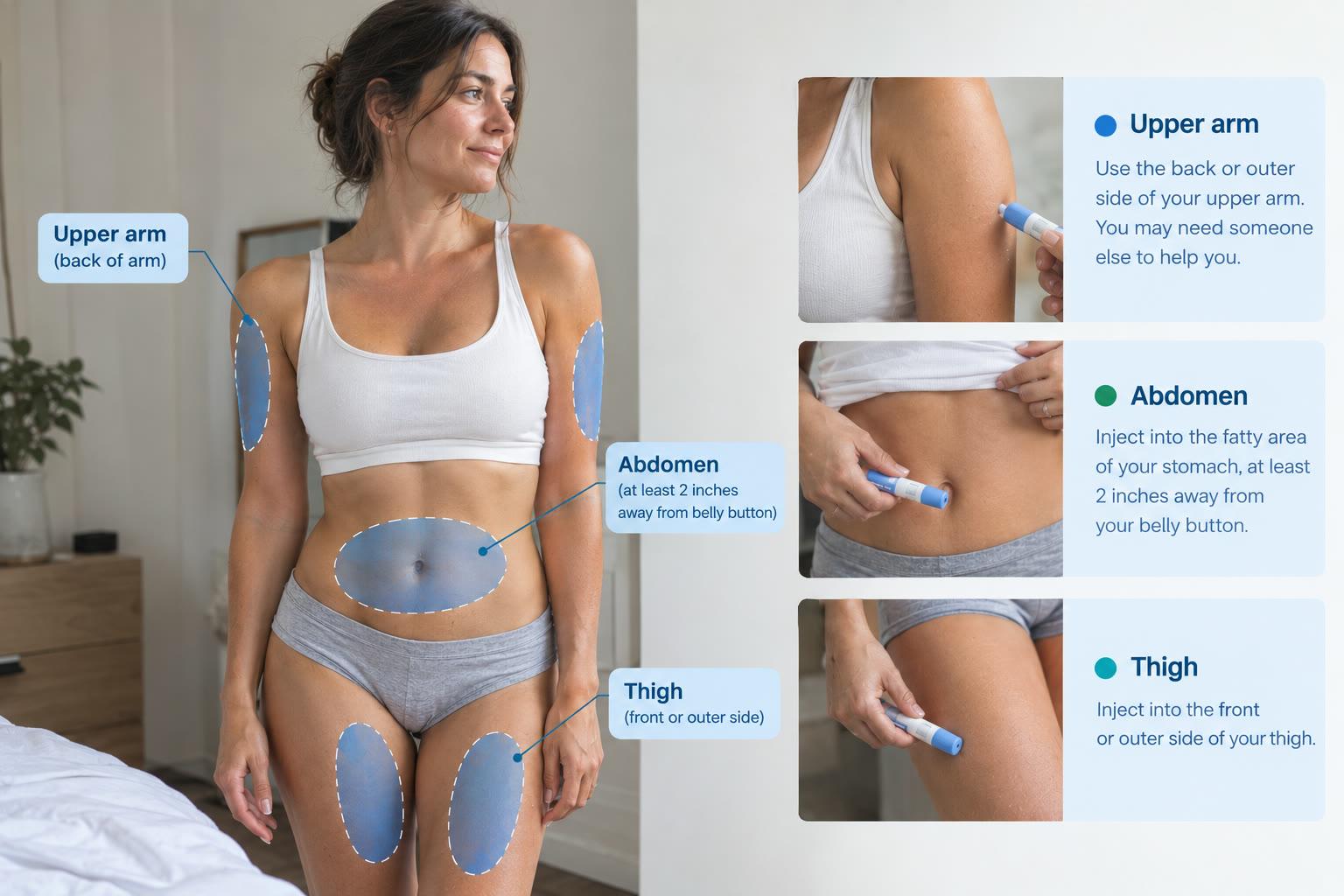
- Rotate sites. Use a different spot each week; you can stay within one area, such as the abdomen, and move around inside it. Rotation is on every label, because repeated injections in one spot irritate the skin.
- Avoid skin that is bruised, tender, red, hard or scarred.
- Let the medication come to room temperature before injecting. Cold injectate stings more.
- Let an alcohol swab dry fully before injecting; injecting through wet alcohol is a common cause of stinging.
- Use a fresh needle each time. Reused needles are blunter, which causes more trauma.
- Do not rub the site afterwards. Gentle pressure is fine.
What if there is a lump that stays?
Small firm lumps sometimes persist for a while, particularly where the same area has been used repeatedly. Better rotation usually resolves the pattern. A lump that is growing, painful, hot, or accompanied by fever is a different matter and needs to be looked at.
| Usually fine | Get medical attention | |
|---|---|---|
| Redness | Small, local, fading | Spreading, with warmth and increasing pain |
| Swelling | Mild at the site | Large, or spreading beyond the area |
| Itching | Local, settles | Widespread hives or itching elsewhere |
| Lump | Small, firm, resolving | Growing, hot, painful, with fever |
| Timing | Hours after, fading in days | Worsening after the first day |
When is it an emergency?
Signs of a serious allergic reaction are not an injection site problem and do not wait: swelling of the face, lips, tongue or throat, trouble breathing or swallowing, a widespread rash or hives, dizziness or feeling faint. Call 911. The approved labels list serious hypersensitivity reactions among their warnings, and these medications are contraindicated in anyone who has had one.
Signs of infection — spreading redness with warmth and increasing pain, pus, or fever — need prompt medical attention too, though not usually the emergency room.
Does this differ with a compounded preparation?
The injection technique and the reasons sites react are the same. What differs is that a compounded preparation is typically drawn from a vial with a syringe rather than delivered by a pen, so technique matters a little more, and the pharmacy's instructions on needle choice and handling should be followed. Compounded medications are not FDA-approved and are not reviewed by the FDA for safety, effectiveness, or quality.
Contact your care team about anything that concerns you, that is getting worse rather than better, or that stops you eating and drinking normally. Seek urgent care for severe or persistent abdominal pain (with or without vomiting, sometimes felt in the back), vomiting that will not stop, signs of dehydration, or yellowing of the skin or eyes. For swelling of the face or throat, trouble breathing, chest pain or any medical emergency, call 911.
This article is educational and is not a substitute for personalized medical advice. Whether any medication is appropriate for you is a decision for a licensed clinician who has reviewed your health history.